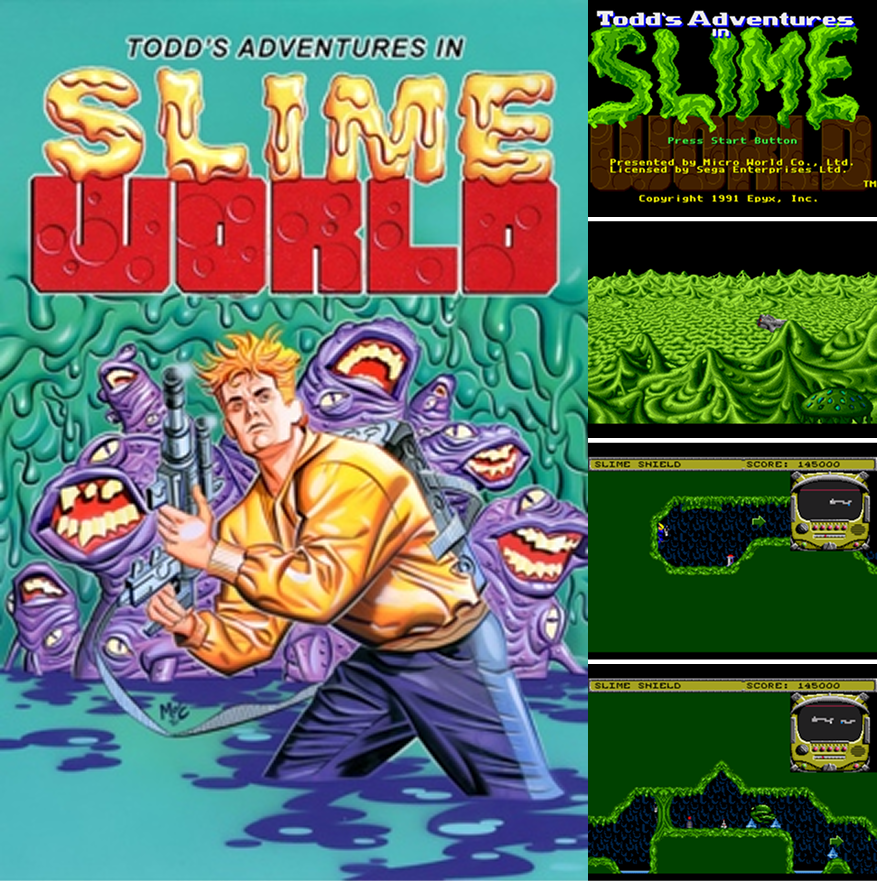
Released in 1990, the quirky Todd’s Adventures in Slime World stranded you on a squelching alien planet filled with acidic ooze, grotesque monsters, and treacherous terrain. As explorer Todd, you must find a way out—armed with little more than a water cannon and your wits. Todd’s Adventures in Slime World is a massive, non-linear platformer that mixes exploration, combat, and environmental puzzles across seven distinct game modes.
Originally released for the Atari Lynx and supporting up to eight players via Comlynx—the first game of its kind—Slime World offers both cooperative and competitive multiplayer. Players climb, shoot, dodge, and jetpack their way through mazes of hostile red slime, hidden deathtraps, and twitchy enemies. Along the way, they’ll collect gems, gadgets, and even set off mega bombs to clear entire rooms.
From logic-based solo missions to full-blown deathmatches with slime guns, this game delivers a huge variety of playstyles. Whether you’re after secrets, speedruns, or sabotage, Slime World remains one of the most ambitious and quirky Lynx titles ever made.
Remember LAN parties? Packing up your computer, keyboard, monitor, joysticks and a million cables and heading over to whichever friend’s house had the biggest dining room table and networking them all together? By the end of the night everybody was a sweaty mess not just because of the intensity of the games, but because all of those early desktop towers were throwing off more heat than the house’s AC could offset.
Now imagine the prospect of a really great game on a truly portable handheld gaming system, supporting up to eight players all using Comlynx cables. To the best of our knowledge, it was the highest number of concurrent multiplayers in any Lynx game. It was also a pretty fun game, and since kids making slime has been all the rage for the past many years, maybe there’s side-mission or backstory involving glue, baking soda, contact lens solution, and food coloring?
If you’re interested in reviving this title, please reach out to us on the licensing page. It’s too cool a concept to leave it stuck in 1990.